
CFD Applications in Industry
by: Qomaira’s Madrasa
Course Info
Duration: 12 Hours
Target Level: Intermediate
Prerequisites: Basic knowledge of Fluid Dynamics.
Pricing
50 (USD) for Graduates
30(USD) for Undergraduates
Course Overview
Bridging theoretical physics and applied engineering. Learn Qomaira’s proven methodologies to tackle real-world industrial challenges, optimize mechanical systems, and validate product developments using CFD Techniques.
This course is based on five real projects and problems our team has solved.
You will learn how we solve these problems using physics, ANSYS FLUENT, and problem-solving!
Read The Syllabus and fill out the form below:
Instructors
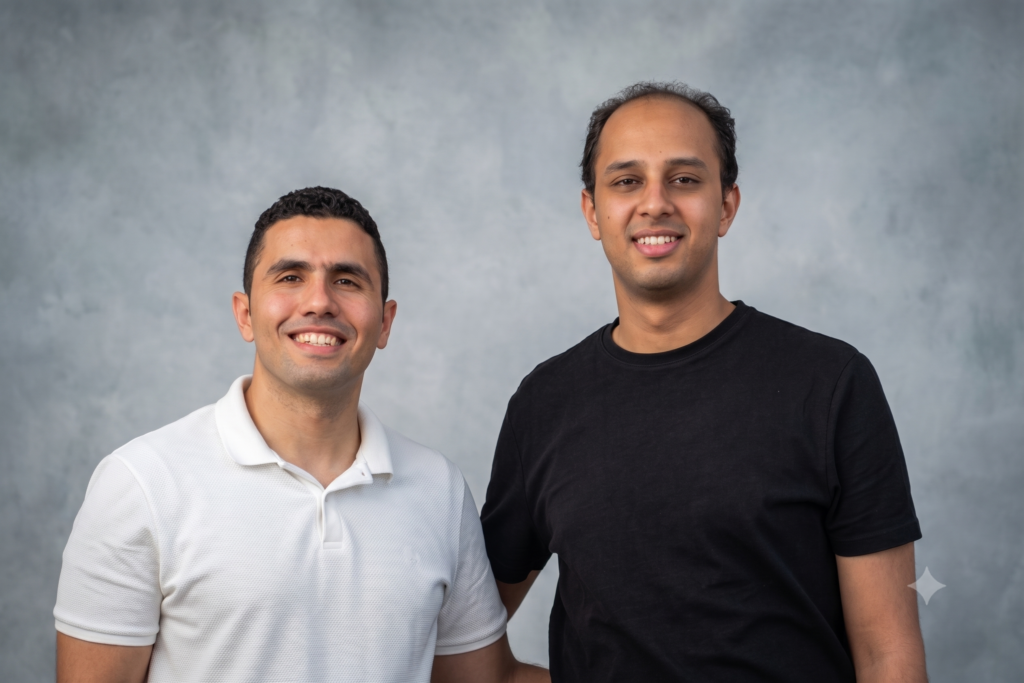
Ahmad AboElmawaheb & Ahmed Fathy Basha
Co-Founders and CFD specialists with Mechanical Engineering and Product Development Background
Course Syllabus
Module 1: The Engineering Review
Business Impact: Understanding the value of CFD in modern industry and its role in driving product development decisions.
System Optimization: Using simulations to optimize complex mechanical systems.
Governing Physics: A practical look at the Navier-Stokes equations and fluid behavior.
Module 2: The ANSYS Workflow
Geometry & Meshing: Best practices for CAD preparation and capturing accurate boundary layers.
Setup & Solution: Defining boundary conditions, selecting physical models, and monitoring mathematical convergence.
Post-Processing: Extracting actionable data and visualizing results professionally.
Module 3: Qomaira Simulation Methodology
Problem Definition: Precisely identifying the core engineering challenge.
Simulation Purpose: Defining the exact goals and deliverables.
Physics Assessment: Analyzing the underlying physics to select the correct solvers.
Module 4: Applied Industrial Projects
The core of our course. Where theories turn into practice. Applying Qomaira’s methodology across five real-world engineering projects from different fields and specializations.
Project 1: Pressure-Temperature-Controlled Enclosure
How to design a vacuum-sealed enclosure while maintaining the internal temperature below -15°C using CFD simulations.
Validation: Results verified against hand calculations and experimental data.
Project 2: Thermal Insulation (EPS vs. Rockwool)
Simulating fire-induced heat transfer and evaluating material thermal performance.
Validation: Correlating simulation data with hand calculations and physical test results.
Project 3: Smoke and Fire in a Tunnel
Using CFD to verify jet fan selections for a vehicle tunnel under normal and emergency fire conditions.
Deliverables: Defining the precise data required by CFD engineers when simulating fire propagation in civil tunnels.
Project 4: Vape Product Development
Leveraging CFD capabilities in the product design of a micro-enclosure (vape device).
Validation: Optimizing the airflow path and temperature distribution to meet strict manufacturing constraints and ensure user safety.
Project 5: Solar Cell Structures
Understanding how CFD capabilities can help solar engineers choose the most robust design for their panel structures.
Validation: Comparing different elevations and installation angles to determine which systems are most reliable against high wind loads.
Module 5: Next Steps
– Road maps for each Applications/ field of CFD.
– How to fit the CFD Engineers Market.