
Problem Description
Lowering the temperature of a spectrometer can significantly enhance its performance. Cooling the CCD sensor provides several benefits:
- Additionally, reduced thermal noise interferes with measurement accuracy.
- Improved stability of components (e.g., detectors, optics) at lower temperatures.
- Additionally, minimized thermal expansion prevented misalignment and distortions.
Regarding target performance:
- Achieve −15 °C at the CCD sensor while operating in an ambient temperature of 35 °C.
- Maintain the overall spectrometer temperature around 10 °C.
Our Approach
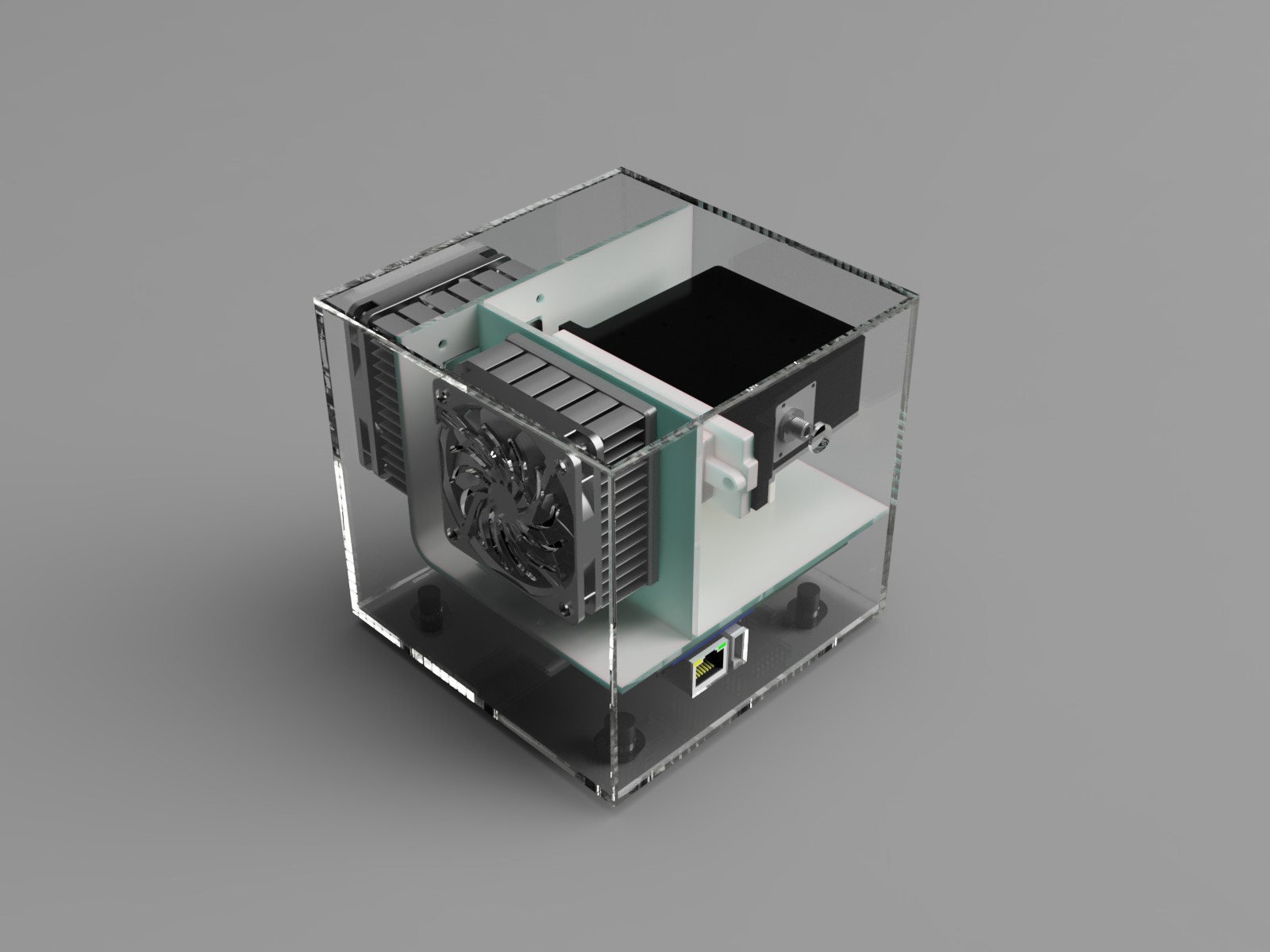
Achieving such a temperature difference is challenging, especially in compact systems. Consequently, we combined thermoelectric cooling, efficient heat dissipation, and thermal isolation strategies.
Additionally, 1. Thermoelectric Cooling (Peltier Modules) Thermoelectric Cooling (Peltier Modules)
Moreover, we used two TEC (Peltier) modules to drive the cooling process:
- Module 1 (inside): Directly cools the CCD sensor.
- Module 2 (outside): Stabilizes the hot side of the first module, maintaining consistent performance.
Powering the modules drives heat from one side to the other, enabling a controlled cooling environment. This process creates a controlled cooling environment.
2. Forced Convection Cooling
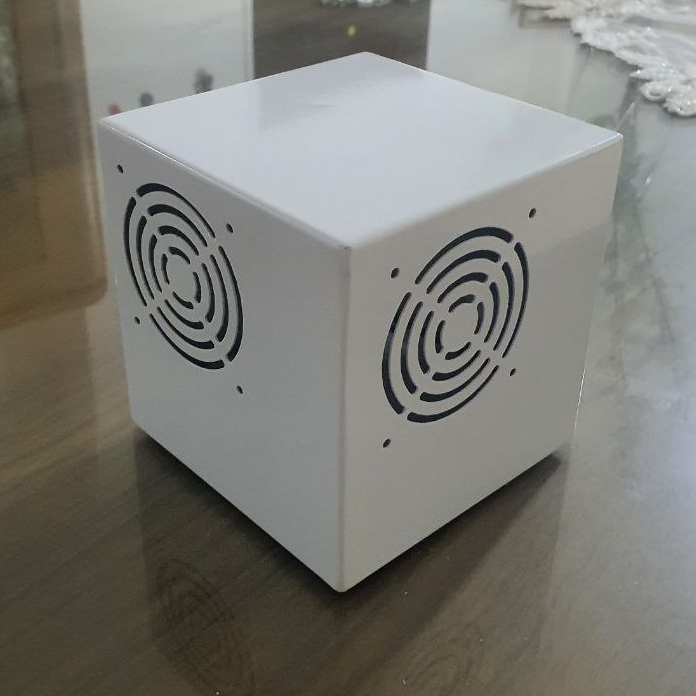
We pair both TEC modules with heatsinks and fans to dissipate heat through forced convection. This improves efficiency and prevents overheating of the hot sides.
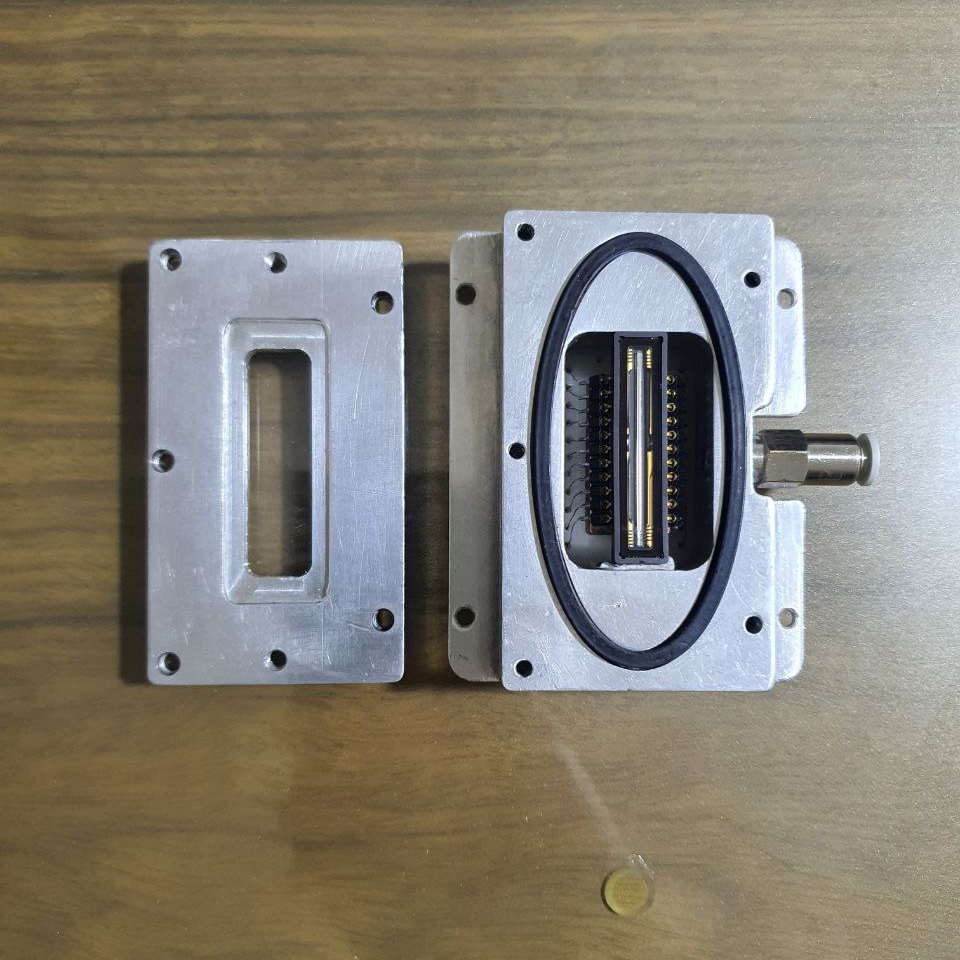
3. Vacuum Enclosure for the CCD Sensor
We house the CCD in a vacuum-sealed chamber, which:
- Prevents condensation at very low temperatures.
- Provides strong thermal isolation.
- Ensures stable and repeatable cooling performance.
4. Acrylic Isolation Box for the Spectrometer
We added an acrylic enclosure around the spectrometer to help maintain stable internal conditions and improve overall thermal management.
Simulations’ Results
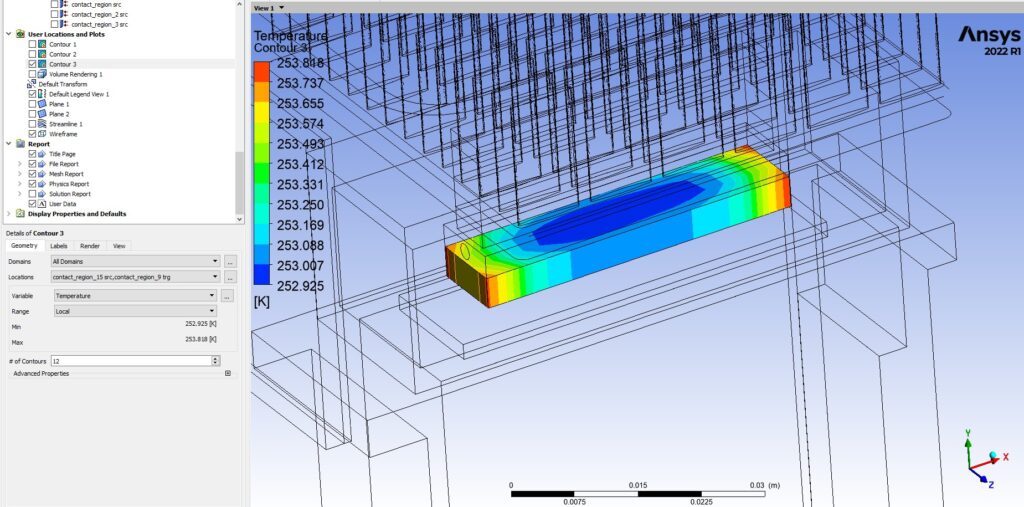
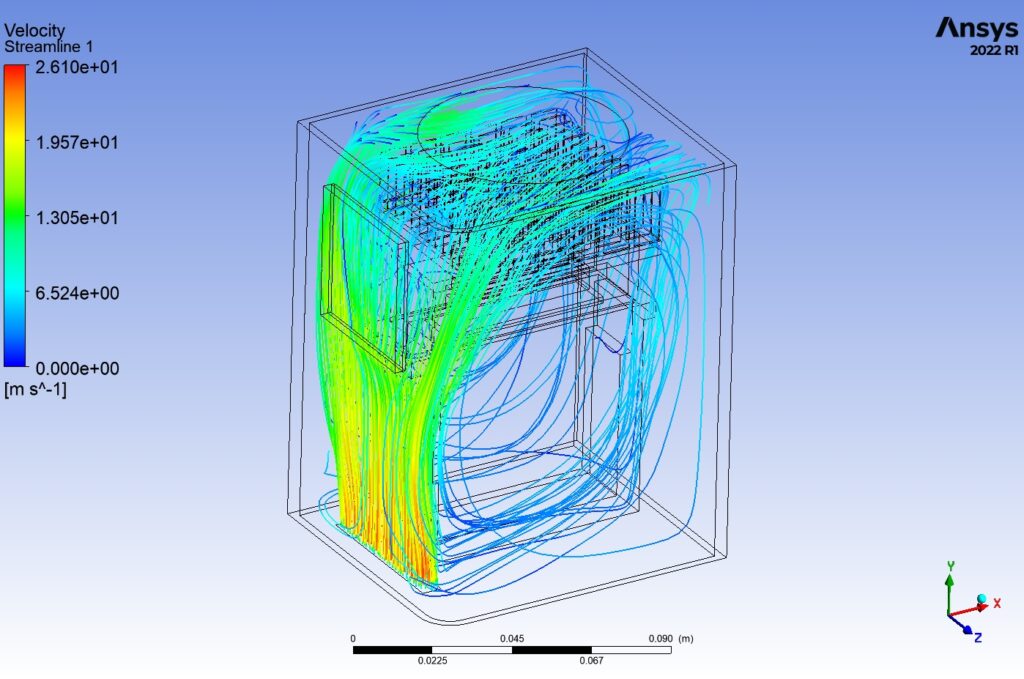
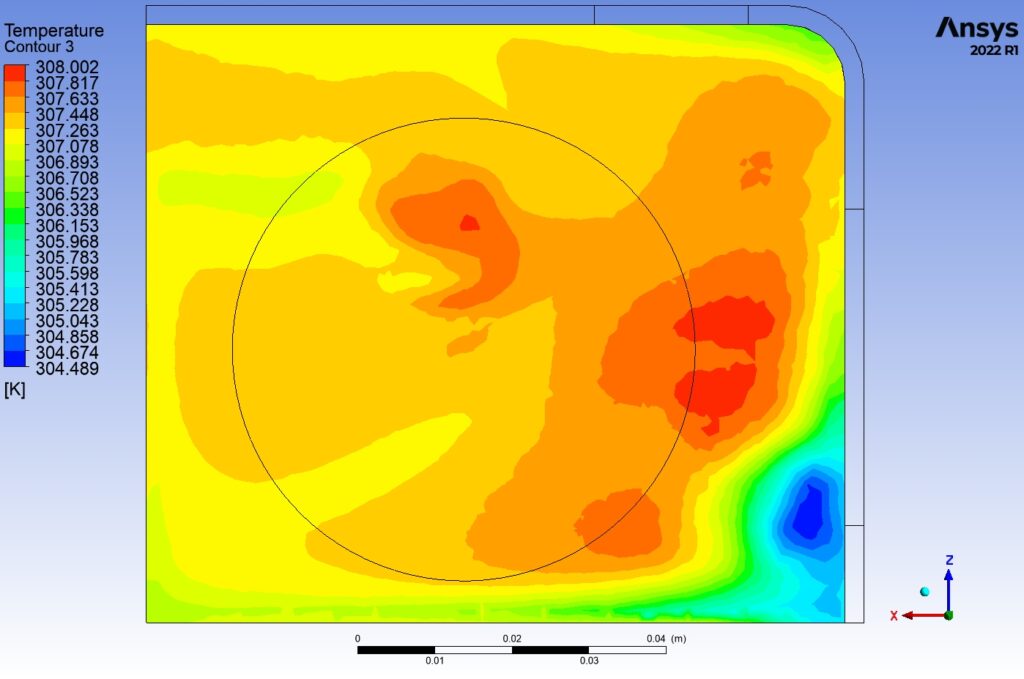
We ran thermal simulations to compare different configurations and select the most effective and feasible design. The results guided the final choice of enclosure geometry, TEC arrangement, and heat dissipation strategy.



Prototyping Results:
We built a prototype based on the optimized design.
- We confirmed thermal stability through testing under real operating conditions.
- The cooling system successfully achieved the target temperature range.


Renders:


